Tag Archives: Merida

The Casual Restaurant Critic reviews Habaneros Yucatecan Restaurant

It has been a while since the Critic has reviewed anything and for that he expresses his most heartburn felt apologies.

If you are tired of the Chaya Maya and La Tradicion, both great options for Yucatecan food and yet, you want something new every once in a while, you might try the relatively off-the-beaten track Habaneros, located next to Puerta de Campeche behind the Siglo XXI Convention Center and the ex Carrefour Chedraui supermarket.

The restaurant is small, the tables and chairs are real ie not plastic donated by a beer company and the service is friendly. There is a complete menu featuring Yucatecan food on one side and Mexican dishes on the other.

The Critic and his Better Half found the food tasty and took some photos to illustrate the care taken in the presentation; the plates look quite pretty when they appear before you.


Don Ambrosio and the Hacienda Lifestyle

Don Ambrosio’s joints ached. As he climbed the stairs to the platform containing the rusting remains of the haciendas henequen scraping machine, 3 large white ladies in straw hats and plaid shorts bearing what must surely be expensive camera equipment close on his heels, he suddenly felt older than his 73 years. He was getting tired of this, showing a seemingly never-ending stream of tourists the ruined plantation that had been a part of his life for the last 60 years.

He turned to face them, directing his gaze at each of the three flushed red faces that stared back at him expectantly. Two had already raised their cameras and were pointing them directly at him; he wondered if he should start a little song and dance number. Wearily, he took a battered henequen leaf – one of his props – from the floor behind a giant metal wheel and, bending it in half, showed them the fiber that would have been extracted and motioned to them how the leaves came up from the fields and onto a conveyor belt that fed them into the scraper, leaving liquid and pulp behind. The tourists snapped away with their cameras and he paused for a moment and smiled a tired smile. His English was unfortunately non-existent and their Spanish was limited to “si” and “no“.

It seemed – no it was – so long ago now that he had worked as a henequen leaf cutter in the vast extensions of land that had once belonged to the plantation, working from 5 AM to 5 PM under the merciless sun for very little pay. In those days, he remembered, there was no question about what one was going to do, or to be, other than a worker at the hacienda. If you were lucky you worked in the hacienda buildings, tending to gardens or perhaps performing cleaning duties for the wealthy owners who spent an inordinate amount of time lounging around on the expansive terraces, sipping cool jamaica tea or perhaps something a little stronger. If you were less fortunate, you worked in the fields and were woken each morning by a 4 AM whistle that signaled the beginning of another backbreaking day in the fields or on the machines.

The gringas had stopped taking photos and were waiting to move on.

He had already taken them through the haciendas main buildings, including the kitchen, living and dining areas and had tried to explain, as best as he could with his mime techniques, the fact that every room in the hacienda could be converted into a bedroom or sleeping area thanks to multiple hammock hooks on the walls. He had also shown them the office, where he recalled Don Ignacio, the owner, spending many hours poring over papers with the assistance of an accountant making sure that every aspect of the henequen production was recorded, measured and accounted for. The gringas had shown special interest in – and taken many photos of – the wooden desk, now infested by out of sight termites and ants, who were silently reducing the ancient piece of furniture to dust before his very eyes.

He now showed them the silent motors that once ran the scraper machines; hulking steam engines that belched smoke unfettered by environmental concerns into the Yucatan sky for years through tall stone chimneys that rose, San Giminiano-like, above the flat land like lightless-lighthouses and now served as beacons for visitors intrigued by the prospect of exploring the Yucatans rich past. He recalled the noise of these machines that could be heard for miles around and while it may have been annoying, it was the sound of money as well, for this was the time of the so-called “green gold” which made the chosen families – those of European descent – rich beyond their wildest dreams and allowed them to furnish their mansions and plantations with the finest offerings from Europe, from floor tiles and furniture to crystal chandeliers and marble statues.  Meanwhile, Ambrosio, and the other 300 dark-skinned Mayan workers and their families, lived in the most basic conditions and shared none of this wealth. Instead, they were paid a meager salary in currency produced expressly for their hacienda – it was useless anywhere else – and were limited to buying their provisions at the tienda de raya, or company store, at often inflated prices.

He led the gringas on to the hacienda’s small chapel. While they – somewhat disrespectfully he thought – snapped close-up photos of the altar and the haciendas patron saint dressed in a purple frock, he recalled that many of his friends from the village had initially been glad when, in the mid 1930’s, the leftist federal government introduced land reform and forced the hacienda owners to relinquish control of the thousands of acres they had and turn them over to the mostly Mayan workers. These same workers had quickly changed their tune when they realized that without the machinery, still under the control of the hacendados, they were unable to do anything with the henequen plantations. The owners, meanwhile, also came to a similar realization as the upstart Indians began demanding a better price for the plant, thereby cutting into their enormous profit margins and making the business less attractive. Many of Ambrosios friends had then complained that perhaps they had been better off under the old system as they had been more or less taken care of by the hacienda owners, who, while not permitting anyone to improve their lot in life had provided such basics as elementary education, a living wage, basic medical care and a strict dose of Catholicism. Of course it was too late; the federal law was now the law of the land and things were about to get even worse. The invention of synthetic fibers dealt the final death blow to the henequen industry which, through the demand for rope produced from this plant for the worlds shipping industry and many agricultural applications, had made a select few Yucatecans inordinately wealthy.

In a way, he had been glad to see the end of the henequen; glad to see the owners abandon the buildings to find refuge and undertake other business ventures in Merida. With the demise of the hacienda, the beatings, the 12 hour work days and the harsh penalties for the most trivial transgressions also disappeared.

He took the ladies to the hacienda gift shop, where they examined postcards and trinkets and bought refrescos from Ambrosios daughter who had forgone a life in the city of Merida, preferring to remain in the pueblo surrounding the former plantation and work alongside her father. She had never known the hard life he had led in the long-overgrown henequen fields and for that, he was grateful.

The gringas were done with their shopping and handed Ambrosio a $50 peso bill and through their gestures and smiles, he could make out that they were very pleased with the tour, such as it was. He smiled back and said softly, “Gracias.”

Unexpectedly, melancholy tears came to his eyes – the eyes that had seen so much – and he turned away before anyone could see.

He was very tired indeed.


Day Four at the Gym; on Lockers, Deodorant and Muscle Fatigue

Thanks to the impossibly fit 50 year old personal trainer who leads my bloated self through the intimidating exercise machine routines with their incomprehensible levers and knobs I am once again deprived of arm movement. On my fourth visit to the gym he put me through what feels like a wringer with probably ridiculously light weights which for this old fart seem unbearably heavy and thanks to his next client – a beach-based real estate agent with no fat that I can detect – being late, I got an extra half hour of this torture. Miraculously, my “faint or puke” reflex has subsided somewhat and I can now move from one set of exercises to another with less steadying time in between. Steadying time, for those unfamiliar with the concept which may or may not be a completely original invention, is the time needed to catch one’s breath, balance and allow blood to return to the brain.

I also “moved in” to “my” locker; which enabled me to try out the facility’s showers and change rooms and found that after a workout, it is highly preferable to have on hand a spray deodorant as opposed to the stick version given the limitations of my previously mentioned arm movement. It would have also desirable to have a locker on the bottom half of the row, not the top, for the same reason.

The showers are the push button water faucet variety, which means they save water and you push that button every 75 seconds or so; the shampoo provided feels more like conditioner in that it doesn’t lather up and so the soap dispenser does the job on the hair as well as the rest of it. Thankfully there are few people in the changeroom when Yours Truly visits so there is no need for jovial banter or the like.

Monday is visit number 5. Should anything exciting or untoward happen, I will write about it.

“It’s too cold in here” – A Rant

You can wear a skimpy top and still be warm with a nice rebozo Mexicano

A number of Yucatecos and Yucatecas, and in particular the Yucatecas, love their warmth. Growing up in Merida has left some of them hyper-sensitive (hiper-sensibles) to what they perceive as cold and with the advent of air conditioning this has lead to the occasional complaint about it being ‘too cold’. Women from the pueblos, who work as maids in Merida, acting on traditions handed down from generation to generation will not iron (clothes) with a window open, since this will make them ill. That frigid Yucatan breeze blowing in from the back yard might give them pneumonia, apparently. I always point out, when discussing this interesting notion, that the Swedes seem to be pretty healthy, in spite of their insane practice of heating themselves to the boiling point in a sauna and then frolicking naked in the snow.

I know of at least one (and there are others, I am sure) local woman who, if she is going shopping at Sams or Costco, will take a sweater; ditto for an outing to Cinepolis where she will sit usually at the back or some place where she won’t feel the air conditioning directly. “Donde no me da el aire” is the expression used; where the air doesn’t get me. Getting some fresh asparagus or the latest imported Washington cherries from the icy room in the back of Costco – no matter how fresh they might be in spite of their whopping carbon foot print which is of no concern to anyone – is completely and utterly out of the question. She is aware of her unique-ness and consequently is prepared with a shawl or sweater when she goes out.

What I find irritating is the insistence of some of these ladies – the ones who refuse to take a sweater or shawl “why should I, I am in Merida!” – to complain, in a restaurant, for example or a meeting room at a conference about the air conditioning to the management or their waiter; asking them to turn down the air conditioning because they are cold. What about all the other people in the restaurant or at the conference? Are they cold too? What if they are menopausal or Canadian and are actually hot? Should there be a vote held on the temperature of the room? You have to admire the self-confidence of these individuals who consider their body-temperature issues far more important than those of everyone around them and believe that they are the only people (that matter) in the room.

Imagine this happening elsewhere. You ask the waiter at Joe’s Stone Crab restaurant in Miami Beach to turn down the air conditioning because you are cold and you would be laughed out of the place! “Who the hell are you” the waiter would think to himself before saying “yes, of course” and promptly ignoring you. If he was a Mexican American waiter, which might be a possibility in the United States these days he would also think “ta loca” a la George Lopez. Try visiting Smith and Wollensky’s in New York and asking one of their seasoned waiters from Jersey to “turn up the heat” because you are cold. You would get quite an earful I’m sure.

I had an interesting exchange with someone on Twitter recently – which prompted this rant – in which she was complaining that she should have asked the restaurant manager to turn down the air conditioning “before she asked for the bill, not after, when they were going to turn off the air conditioning anyway” (her tweet) I suggested she take a sweater if she was one of these people who are hiper sensibles to cold air and she replied sarcastically “Oh yes, of course, I should carry around a sweater in Merida if I go out. Good point”

I think so. Turn it down a notch, dear. You’re not that important.

Bryan’s Surprises with Great Service!

One of the most common criticisms of Merida restaurants by the Casual Restaurant Critic is the deplorable service in most places (with a few notable exceptions), especially at the higher end of the price range where it seems like everything has been invested in except waiter training and selection.

So, on a visit this afternoon to the newest of the Trotter’s restaurants, it was a joy to be able to finally receive good – no GREAT – service from a young man who looked after the Critic and his Better Half. After being ignored by the hostess on the way in (she was talking to some folks so she could be forgiven for not being able to multitask at the door although that should be in her job description) the Critic was not expecting anything better but an older gentleman who one could assume is the capitan de meseros or manager led the party of two to a table. Actually, it was a booth, as per the Critic’s choice and it was a bad choice. The only quibble for today’s meal was the seating. The booth looks inviting with what appear to be cushy cushions and a cozy sort of vibe; unfortunately, one sinks into the not-so-cushy cushions and one then feels the wooden frame within on one’s tush. Note to Mr Trotter – restuff the cushions and back rests!

A pleasant young man approached the table, took drink orders and left menus. Better half ordered a tuna sashimi salad and a potentially complicated version of the burger which was essentially the burger but without the bun. The Critic ordered the small version of the Caesar salad and a pasta consisting of black spaghetti and veggies in a lemon cream plus sauteed shrimp. And here is the amazing part. You know when you are telling your waiter what you want and he is furiously scribbling on a pad of paper? Well this young man just nodded and when the Critic and Better Half had ordered, he confirmed the order from memory, almost verbatim and with a curt smile and a con permiso left to tell the kitchen what to do. Please note that this is the first time in Merida, where the Critic has lived for TWENTY FOUR YEARS, that any waiter has not written anything down. One sees this in upscale restaurants in the US, Canada and elsewhere, but this was a first for the Critic in Merida. Even in the most basic panucheria, where all there is to order are panuchos, salbutes and a caldo, the waiter on hand will always be writing everything down as if it was so darn confusing.

The food was very good. The sashimi salad with a peanut dressing was cold and large enough to make entree status, while the mini Caesar was more than mini and actually a Caesar, unlike the version the Trotters serve up at their flagship location, Trotters, which contains all kinds of things not generally common in a Caesar salad.

The sans-bun burger arrived perfectly presented and the spaghetti, in spite of the misgivings about what a lemon cream would taste like, was delicious.

Afterwards, the bill was summoned and arrived promptly. The manager also stopped by at the entree portion of the meal to see if everything was alright.

A great lunch experience; hopefully this level of service will be maintained!


It’s too early for brush fire season!

The temperatures in the Yucatan have been over the top in the last week and a half or so. This kind of heat is more common around the end of March when we slide into the hottest time of the year; the months of April and May. Along with the dry, stifling heat, we get many a brush fire as campesinos burn their land in preparation for planting in the rainy season that begins in June, and many a “controlled” fire becomes something much bigger with a whiff of wind and an errant spark.

But to see this in February is unusual. I can only imagine what is in store for us when April gets here.

The (rather blurry) photos were taken last night, between Chelem and Chuburna. A huge brush fire was raging through the mangrove area away from the beach and not close to any towns. In spite of its size, no one had apparently reported it to the local emergency number 066 which we did.

Santiago Learns a Lesson

** warning – this article contains ‘bad’ words **

Santiago Puc Arjona felt chastised and furious. An important lesson about drinking and driving, as well as the dangers of littering, had been brought home to him just minutes before, when, while driving back to his home in Merida, he drained the bottle of Corona he had brought with him from his cousins wedding in Tixcacal and tossed it out the window of his silver 1992 Chevrolet Silverado pickup truck. The bottle had shattered against the glass in his drivers side door, which was when Santiago realized with some surprise that he had forgotten to roll down the window before throwing the bottle out.

Chinga su madre!” he said aloud, angrily.

Continuing to curse his bad luck under his breath, he pulled off the narrow highway and, checking for traffic, opened the door and stepped out to survey the mess. The remains of the Corona bottle littered the inside of the truck and the drivers side window now featured a rather prominent crack that ran diagonally across it.

Me lleva la puta madre” he cursed again under his breath angrily and proceeded to look behind the seat for something with which to sweep out the glass. Yesterday’s copy of the Por Esto newspaper would do, he decided, and rolling up a section or two began to sweep the glass shards out of the truck and onto the side of the road.

When he was done, and shiny bits of broken glass lay motionless on the grey asphalt, he felt a sudden and very real urge to urinate. Leaving the side of the pickup, he stepped to the front of his vehicle where traffic coming from behind could not see him and unzipped his fly. The relief was blissful as he watered the weeds on the side of the road and he turned his face towards the sun, closing his eyes, to take in the last of the afternoon rays. The buzz from the beer at the wedding had not dissipated even with the adrenaline-pumping moment when glass hit glass inside the truck.  He zipped up and walked back to the drivers side of the pickup taking no notice of a car-full of tourists who turned their heads to see what he was up to as they drove past in a rental with orange Quintana Roo plates.

Snakes are not uncommon in the Yucatan and among them, the boa constrictor is often seen on highways and byways, sometimes making the Local section of the Diario de Yucatan newspaper when a group of police or firemen are called upon to shirk their patrolling duties and is assigned the delicate task of catching one in someones home and then have their photo taken with their prey.

It is less common for a snake such as the aforementioned boa to to slither out of the underbrush on the side of the road and somehow find its way into a vehicle, but today, as Santiago’s luck would have it and while he was happily relieving himself, a boa constrictor did just that, nestling itself comfortably in a space behind (and under, given its size) the bench seat that stretched across the interior of the pickups cabin.

Santiago got in the pickup, turned the key and the 6 cylinder engine roared to life reassuringly. Putting the vehicle in ‘drive’, he pulled out onto the highway and reached the periferico a few minutes later, coming to a stop at the traffic light and completely oblivious to the fact that an enormous reptile was curled up just inches away.

The Casual Restaurant Critic visits the Hacienda Temozon

While checking out several haciendas recently, the Casual Restaurant Critic had the opportunity to visit – and have a meal, albeit a small one – in the restaurant at the Hacienda Temozon, an upscale hotel part of the Starwood Collection of very high-end hacienda accommodations in the Yucatan.

In the past, the experience in the restaurant has been a far cry from the rest of the delights offered to the senses when one visits this property; the gardens, the pool, spa and rooms are gorgeous, while the restaurant lacked the level of quality commensurate with the high standards set in the previously mentioned areas.

On this occasion, the Critic and two guests had a light lunch consisting of jamaica, the refreshing red tea made from jamaica flowers, a lime soup, a trio of panuchos and the Critic’s choice: a Kinich salad (photo pending). The food was tasty and fresh, particularly the salad, which was a real mix of typical Yucatecan ingredients including ground pumpkin seed and chunks of smoky longaniza sausage. On the service end, there is still room for improvement. Although the welcome was cordial and the attention to guests and Critic alike courteous and prompt, the Critic feels that in a restaurant of this caliber ladies should be served first and the typical arrival of the food on a tray parked next to the table, followed by the waiter picking up a plate and announcing it with a question should be outlawed. The reason they ask is because they don’t know who ordered what and this could so easily be solved, as it has been in countless restaurants around the world, buy a simple system of numbers corresponding to guests and their menu choices. This would eliminate the need for the question “Sopa de Lima??” and enable waiters to serve ladies first, not last, as was the case during this lunch.

The flies were also a problem, getting into the drinks for a swim, settling busily on the bread and in general causing much fanning of hands and napkins more akin to an experience at a much less luxurious dining establishment.

Prices were on the high end for the food offered (Yucatecan dishes at $150 pesos plus) considering what one can obtain for such a price tag at places closer to town and the service and fly details mentioned above. The view of course and the semi-outdoor experience of dining in such a beautiful space was fantastic however and for a special occasion, this might be a pleasant destination to head to for a special occasion.

A Casual Critic Revisits Elio al Mare (for lunch)

All the Critic can say to begin this review is what the hell happened?

That would be a great way to describe what was going through the Critics mind the other day when he visited the famous Italian seaside eatery outside Progreso in the company of distant relatives from the Sofia Vergara family. Are you now thoroughly distracted, dear reader? Well, don’t be, because what the Critic is about to write is important and will save you gas money if you are coming from Merida with the intention of enjoying a good Italian meal.

Let the Critic preface (some more) by saying that this is what most people would call an ‘expensive’ restaurant for Merida; pasta dishes are in the $150 to $200 peso a plate range and there are Italian wines that are truly Italian – not from Costco – and priced accordingly. That, and the rave reviews previously expressed not only by the Critic but also others who have loved this place in the past, was one of the reasons the Critic wanted his guests to try this restaurant.

While they loved it, the Critic was appalled.

It was just after 1 PM, and the sign said they were open. However, no tables were set up and the little trio (Critic plus two) was greeted in a casually uninterested way by two individuals of the male kind, while two more of the female variety sat in the kitchen eating a meal of pasta and bread. Two schoolchildren were sitting at a small table in the restaurant, presumably somehow related to the women in the kitchen, also eating their lunch. They later provided sound effects and background noise in an otherwise empty restaurant.

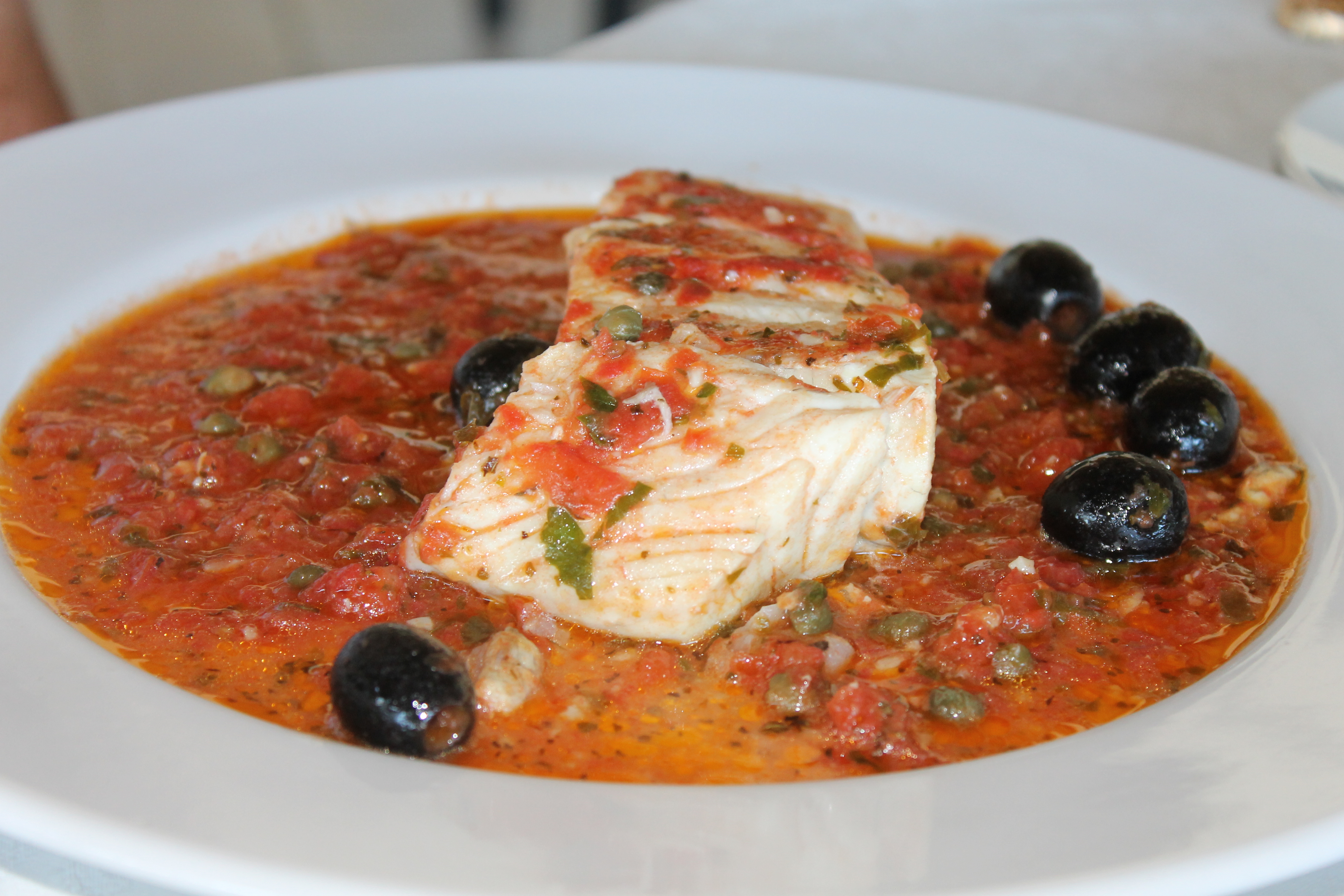
Gone are the days of the charming Italian host, the sangria, the restaurant set with white tablecloths. Gone is background music, any ambience whatsoever or any feeling of being welcome. A meek, unsmiling individual with the personality of a sea urchin – a traumatized sea urchin that has suffered parental abuse as a baby urchin and moves like it expects a whipping any minute – set the one table and proceeded to take the order. Two of the dishes ordered were not available due to the absence of gorgonzola in one case and basil in another. This is an “upscale” Italian restaurant, you will recall. Orders were modified and eventually arrived at the table. The food was fine, in fact it was pretty darn good, especially the fish, a robalo in a tomato and black olive sauce that was succulently flavorful, albeit raw on the inside. The Critics pasta was tasty but non-descript and the other pasta dish, fetuccine carbonara, apparently was decent enough also.

Did the Critic already mention the noisy children who were now playing hide and seek and shrieking in delight as they skidded through the restaurant from one end to the other. The waiter, if one could call him that, would hide near the kitchen and when forced to come out to set another table for yet another couple (also foreigners who spoke no Spanish) would pass the Critics table and make a determined effort to not establish any eye contact or look at the table, choosing instead to look nervously the other way lest the Critics table asked for something he might have to respond to.

The Critic can not in any good conscience recommend this place any longer, at least not for lunch. What a disappointment.